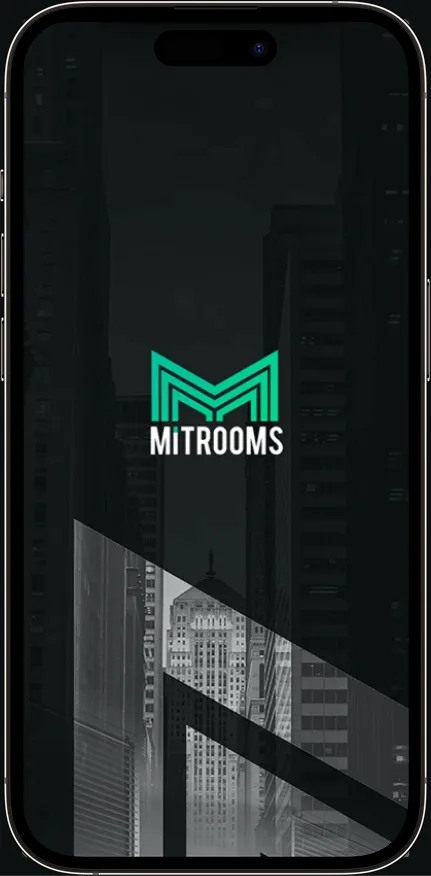
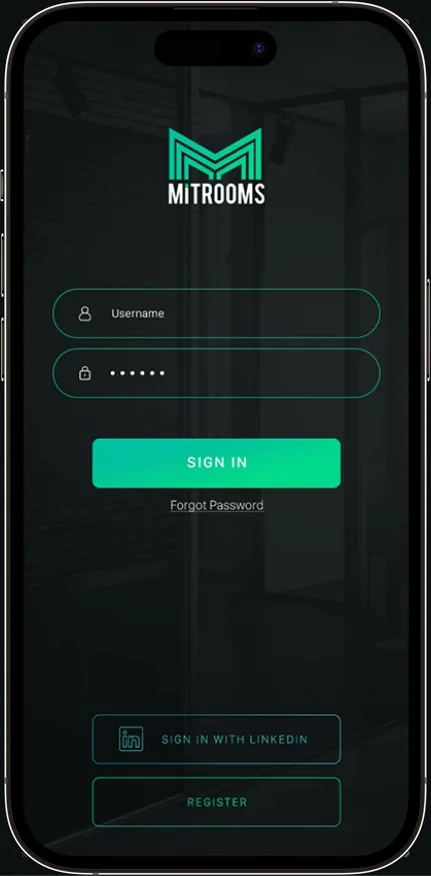
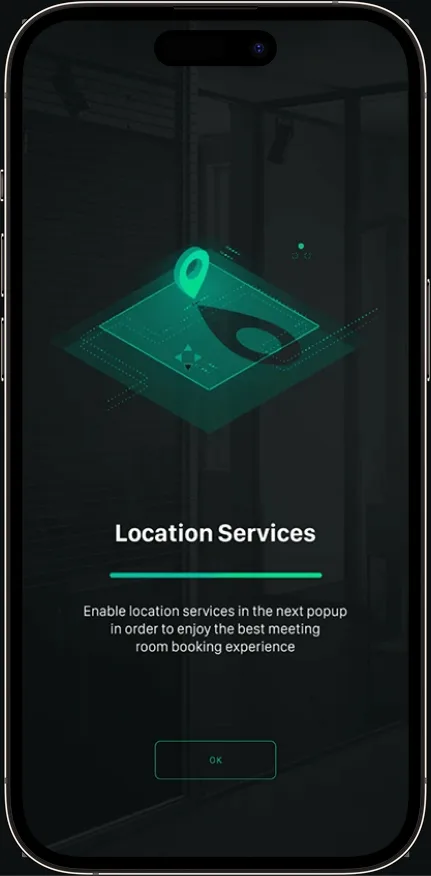
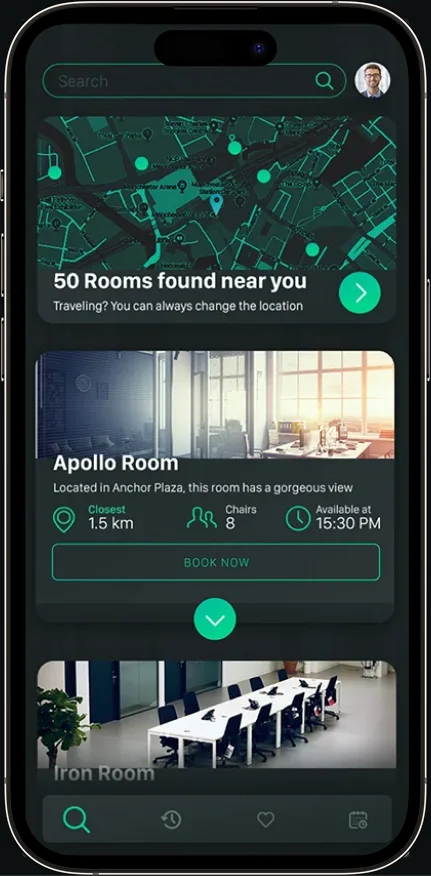
Mit Rooms was a design brief set by Qualitance, a Bucharest-based product development company, as part of their interview process. The brief: design a mobile app that helps professionals find and book meeting rooms — fast, friction-free, and actually pleasant to use.
I ran the full process independently — competitor research, market signals, persona work, ideation, brand, and a complete set of app screens. The work landed the offer. I made the decision to pursue Oracle instead, but the relationship didn't end there — the designer who interviewed me later referred me into Adobe.
Brief
Design a mobile app for professionals to discover and book meeting rooms, with a clear, purposeful user journey from search to confirmation.
Process
End-to-end solo project: framing the space, defining the user, prioritising features, creating the brand identity, and designing all screens.
Outcome
Full case study delivered for the interview. Offer received. Chose Oracle — but the connection made here later opened the door to Adobe.
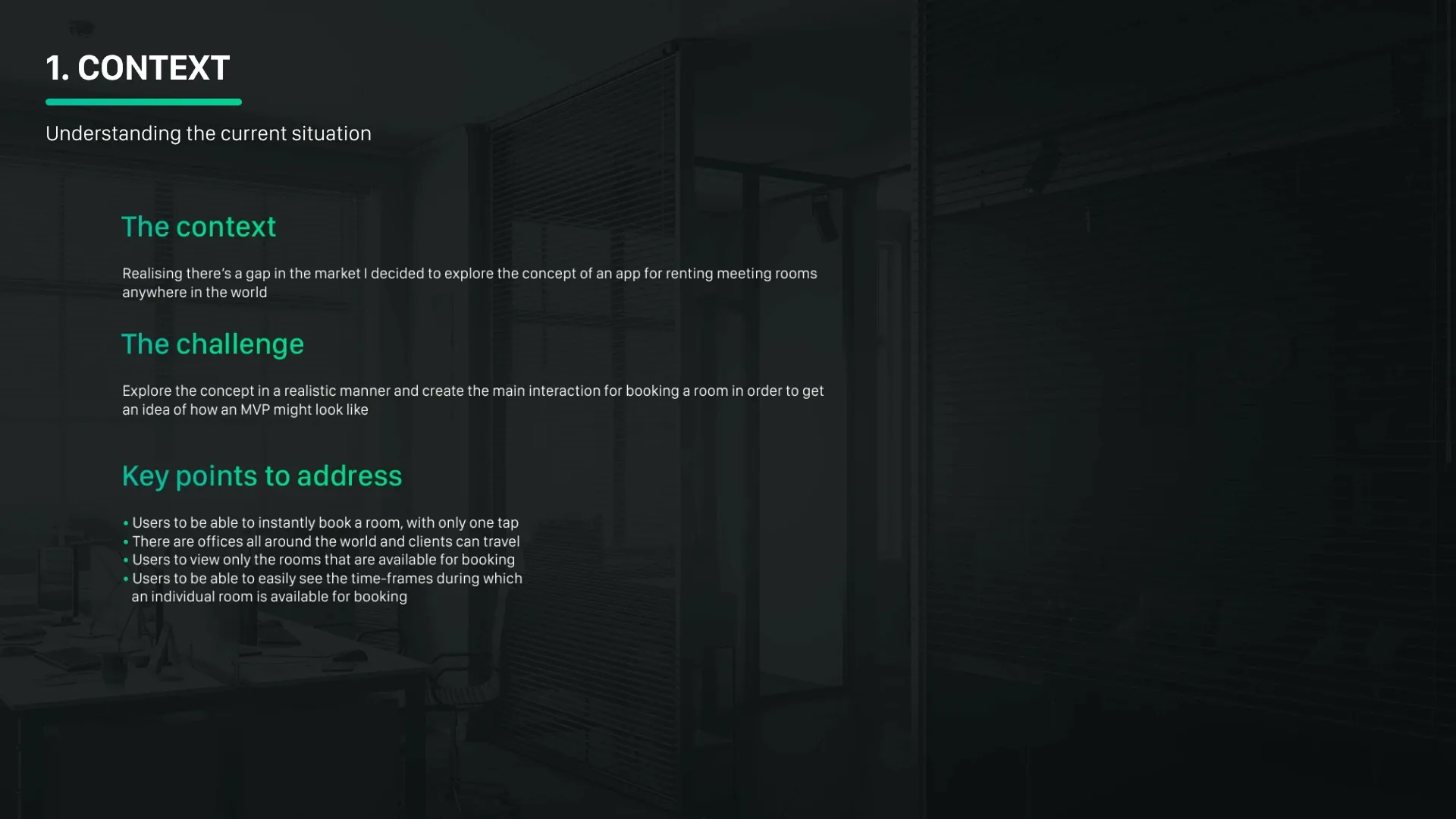
Project context — the problem space: professionals wasting time trying to find and reserve a suitable room, with no unified, intuitive tool to help them.
Framing
Understanding the space before designing for it
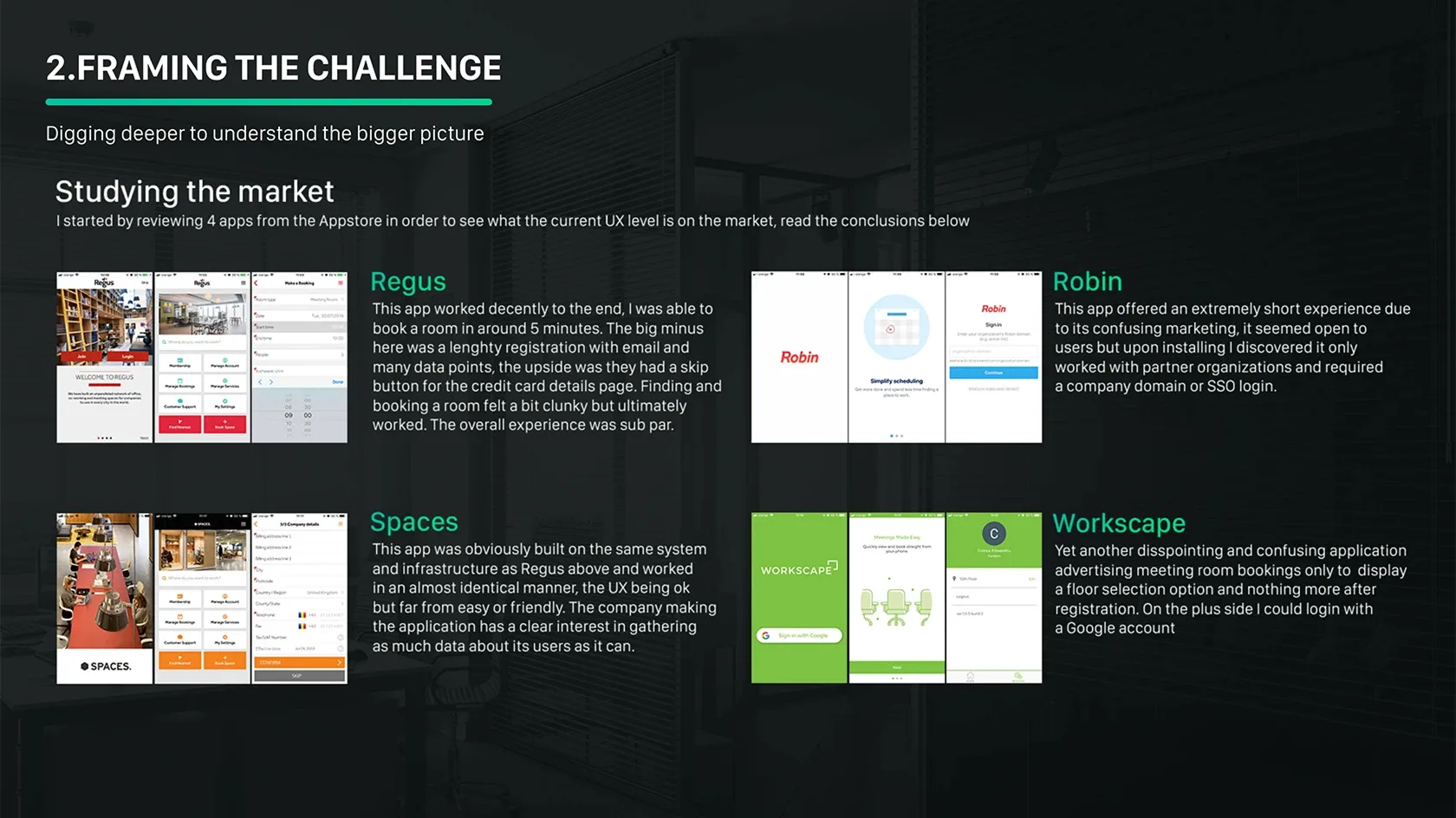
Competitor analysis — mapping the existing landscape to understand where products were falling short and where a meaningful gap existed.
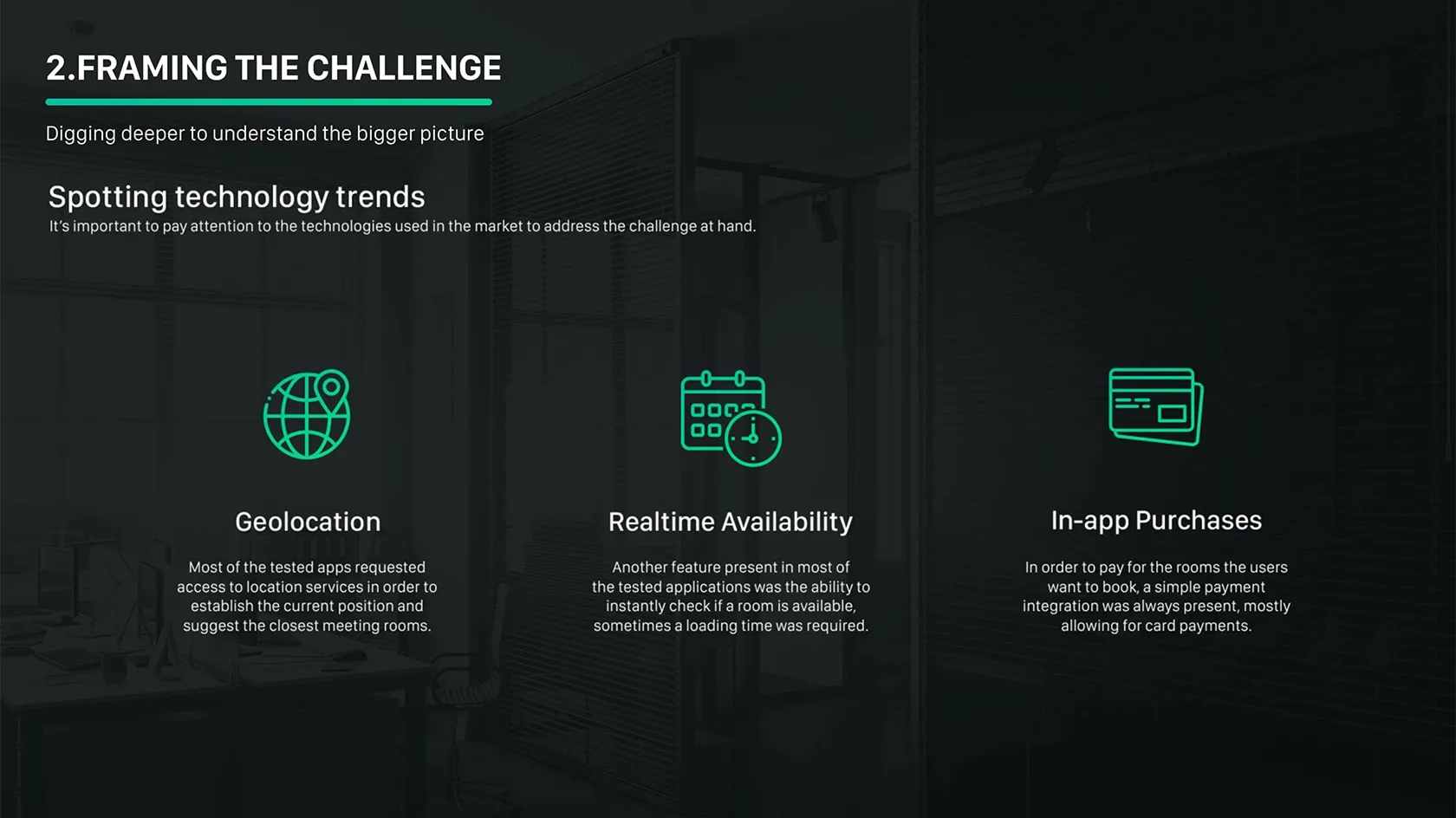
Market and technology trends — identifying signals shaping how professionals relate to shared workspaces, from hybrid work adoption to smart building infrastructure.
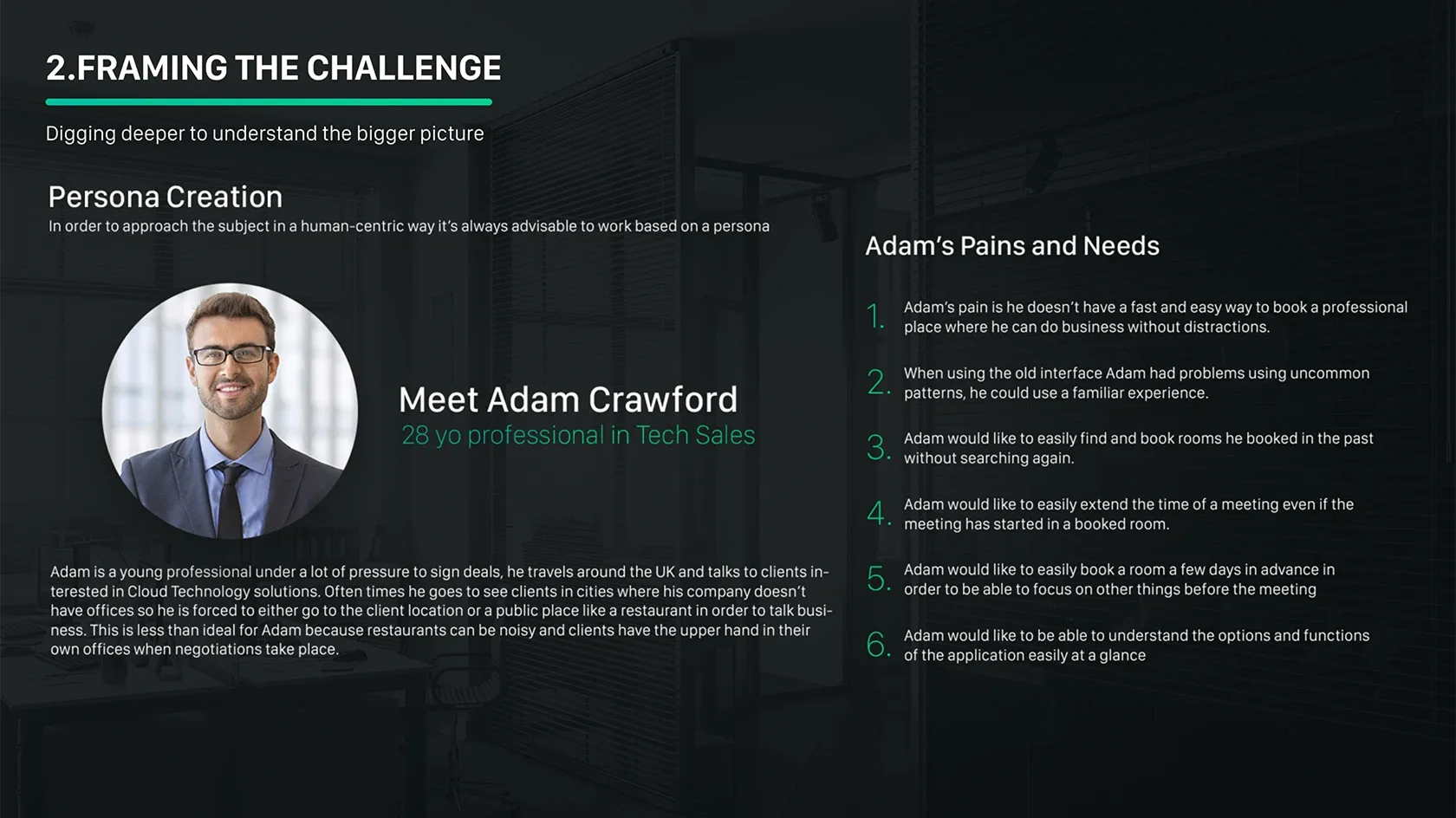
Persona understanding — defining the primary user: a time-pressured professional who needs a reliable room, not a feature-laden interface to navigate.
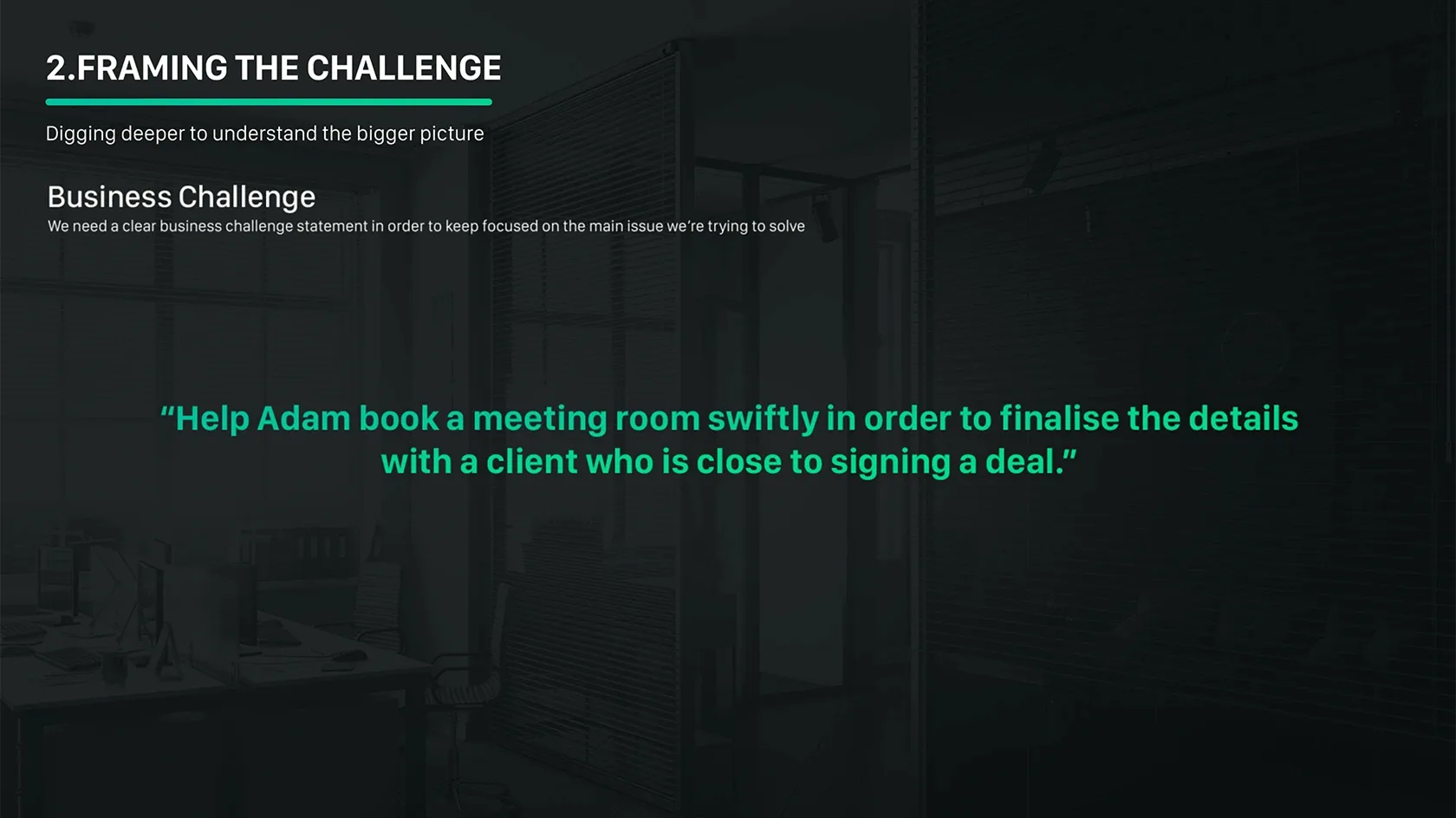
Mission statement — crystallising the design intent into a single clear direction before moving into ideation.
Ideation
From direction to decisions
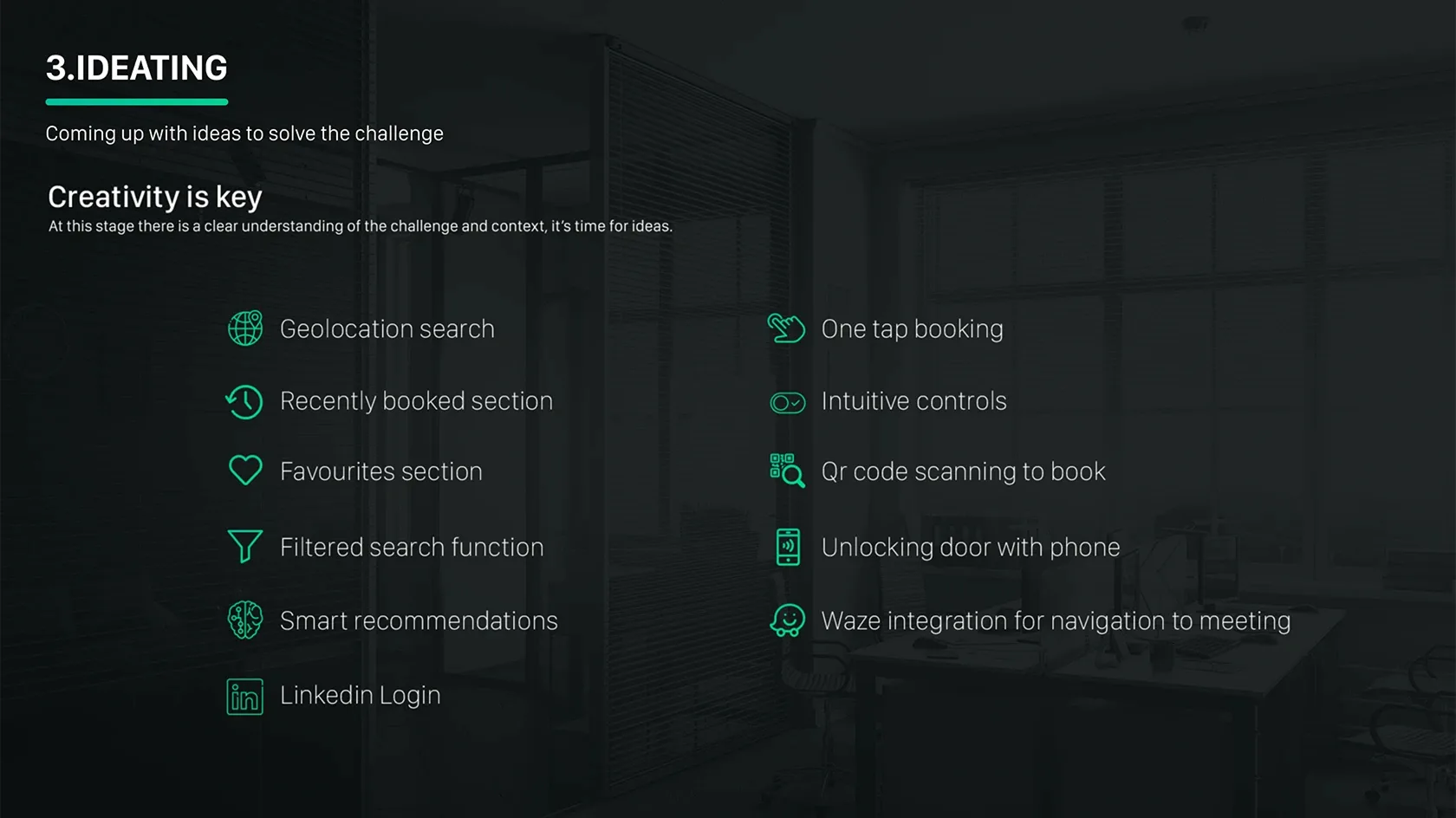
Ideation — exploring different conceptual directions for how the app could work, from the core booking flow to differentiation opportunities.
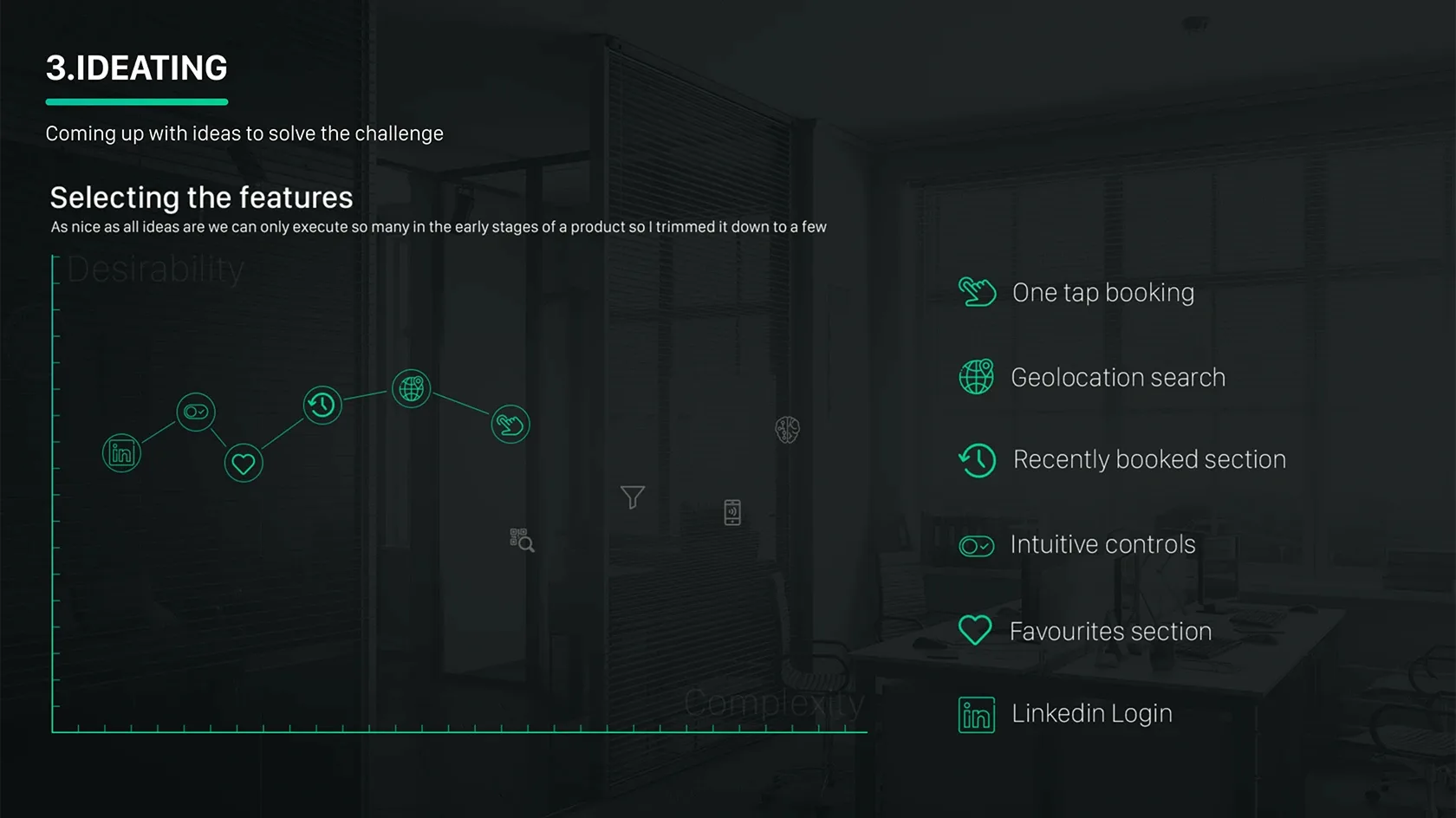
Feature prioritisation — deciding what to build first and what to defer, keeping the MVP focused on the core job-to-be-done: find a room, book it, done.
Execution
Brand, system, and screens
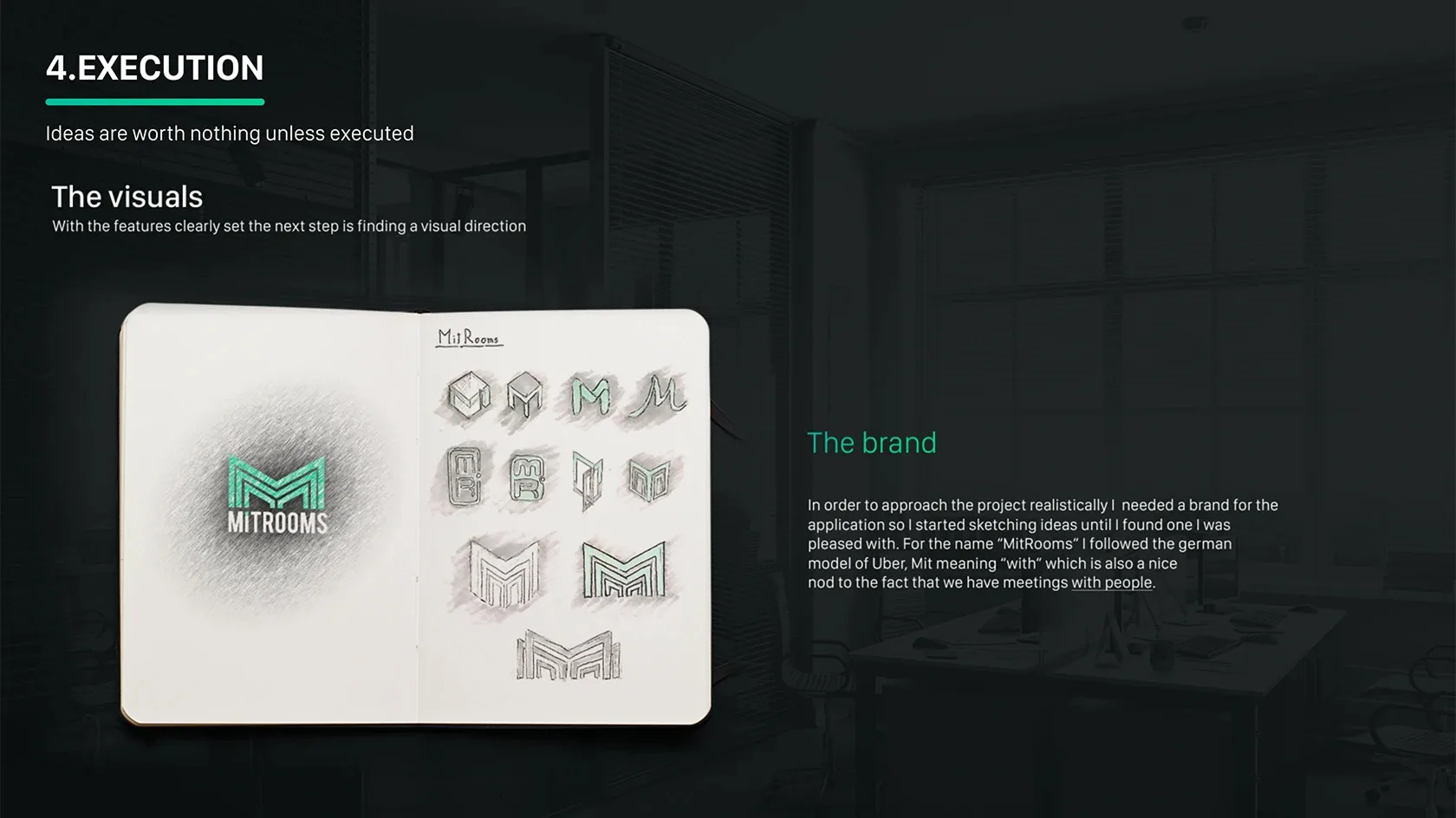
Brand identity — naming, visual language, and tone. The name Mit Rooms plays on the word "meeting" — informal, direct, and easy to remember.
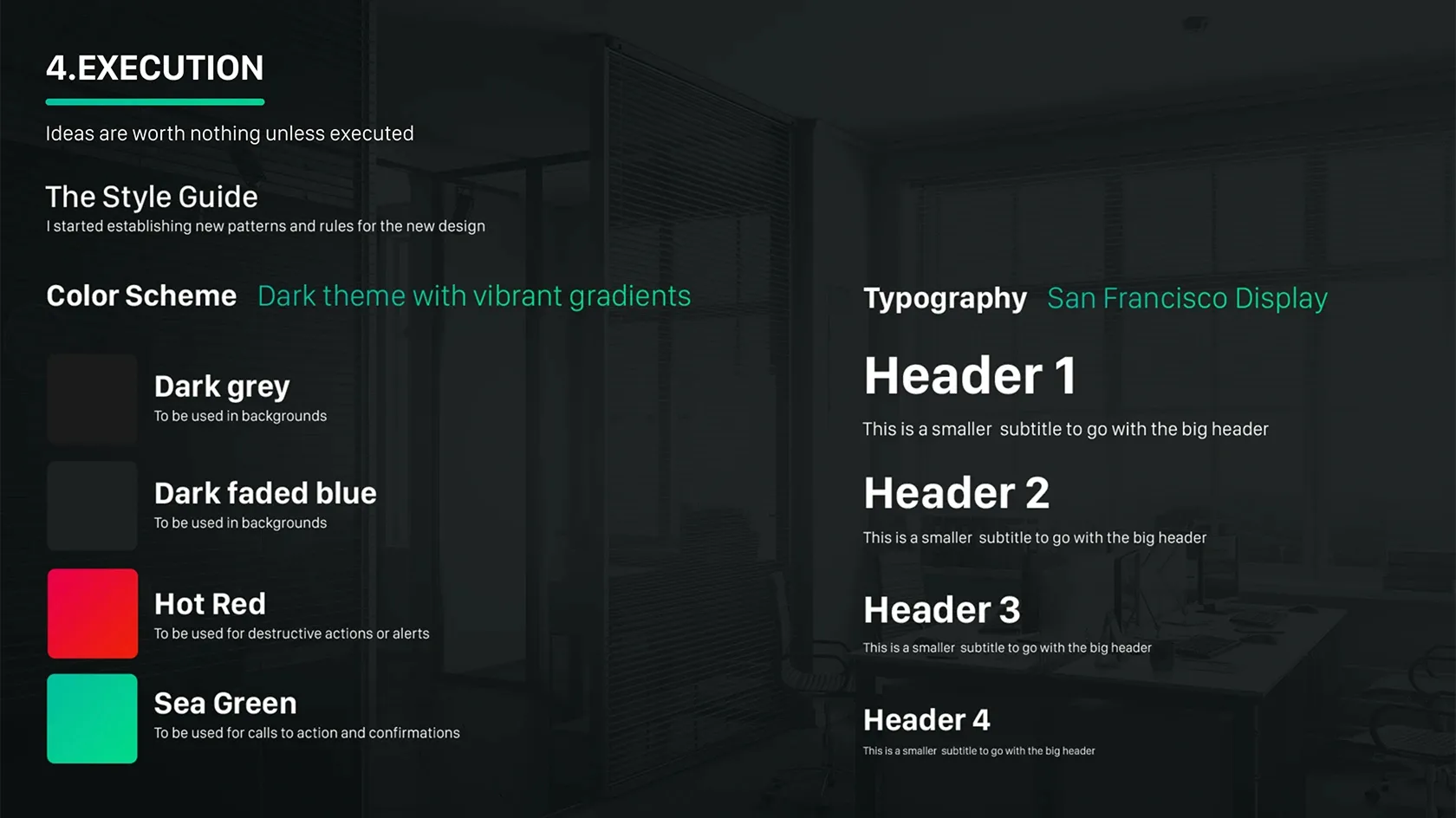
Style guide — colour, typography, and visual grammar defined before any screen was designed, ensuring a coherent system from the start.
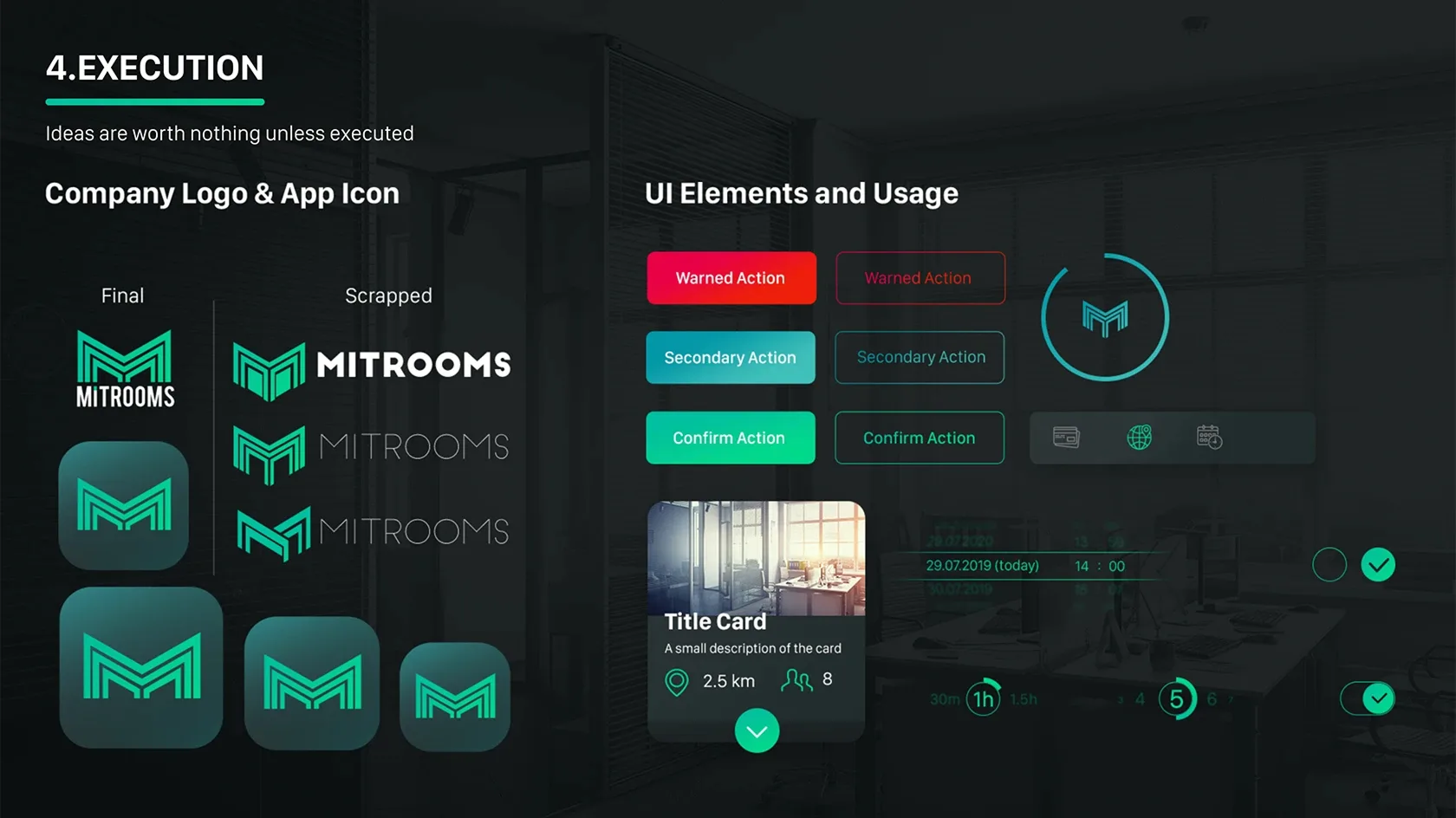
UI components — the building blocks of the interface, designed as a reusable system rather than one-off screen assets.
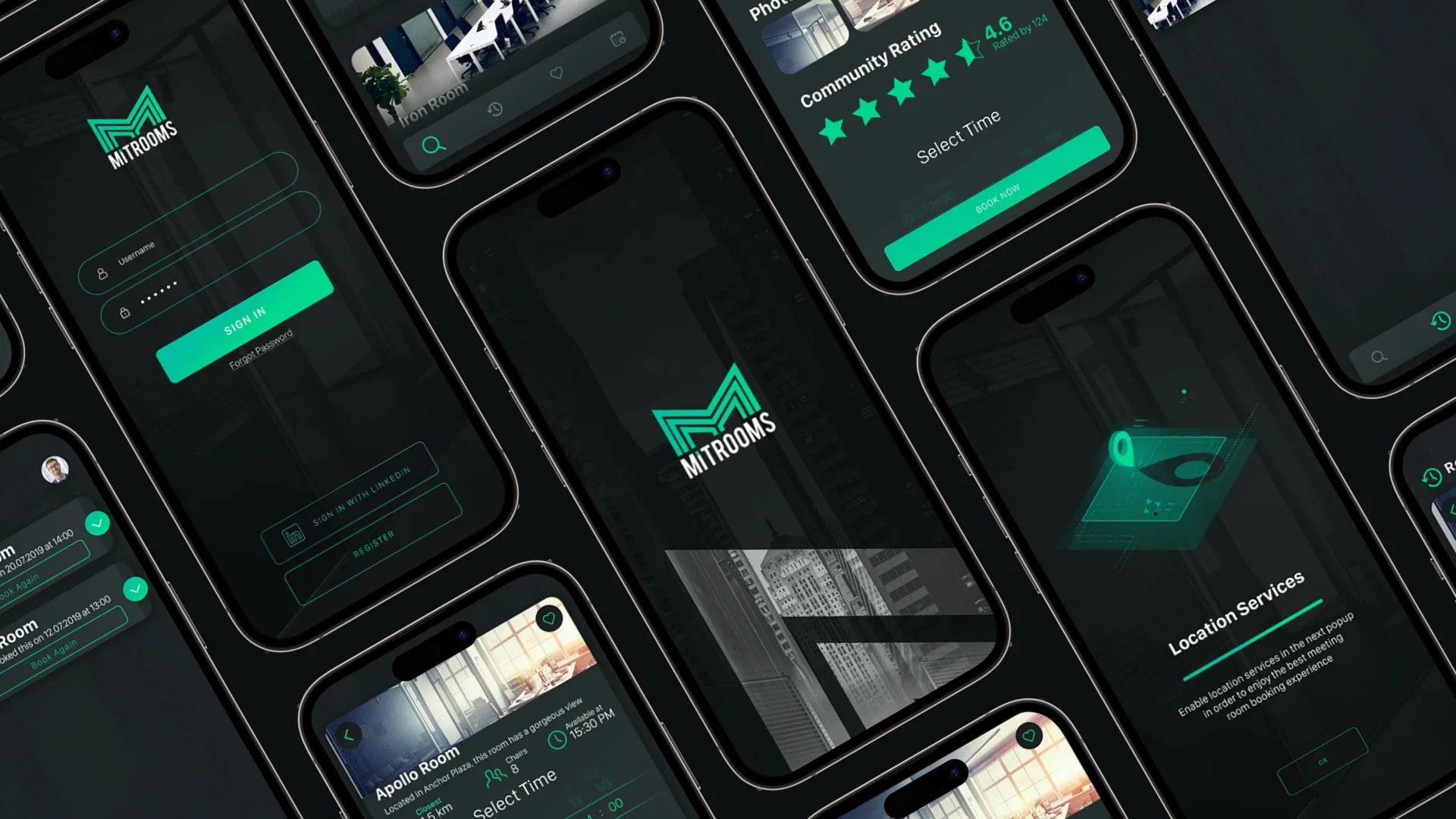
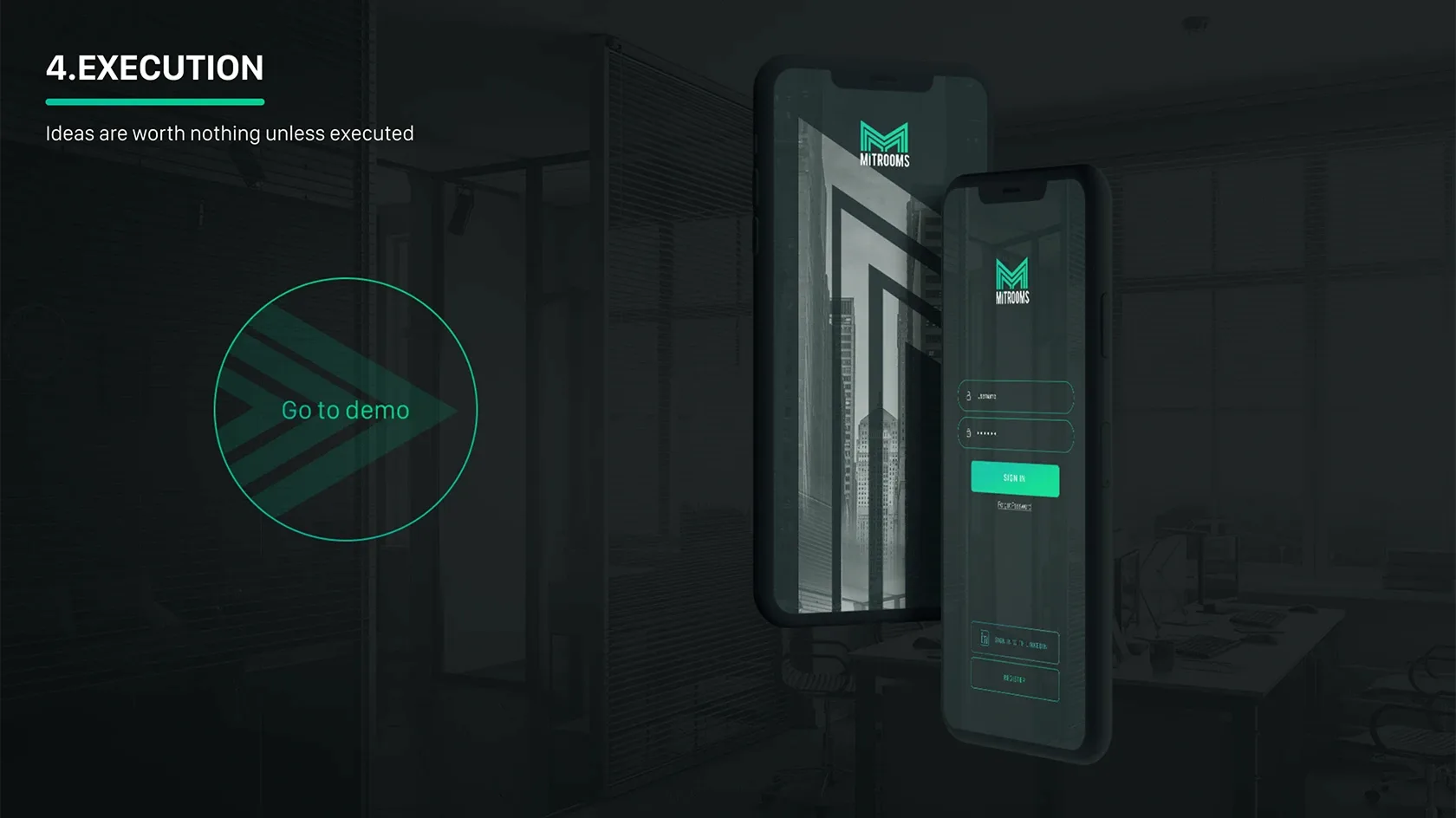
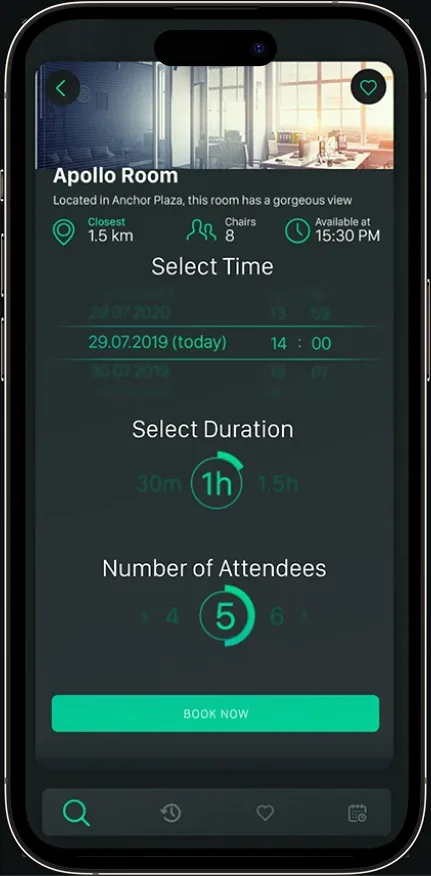
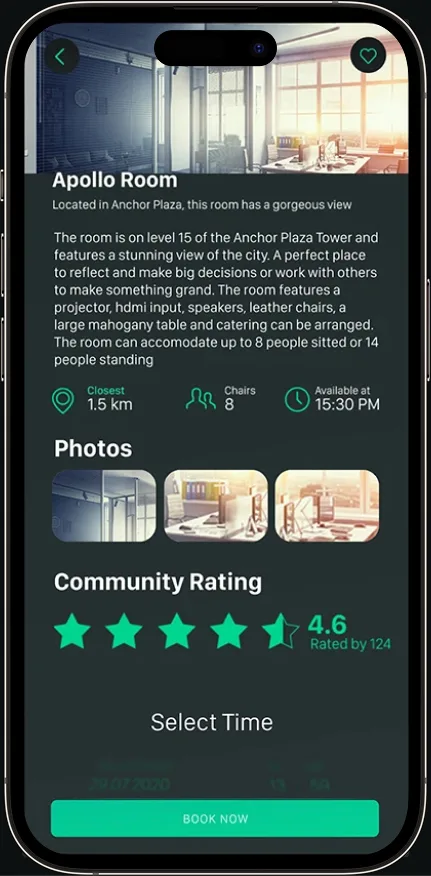
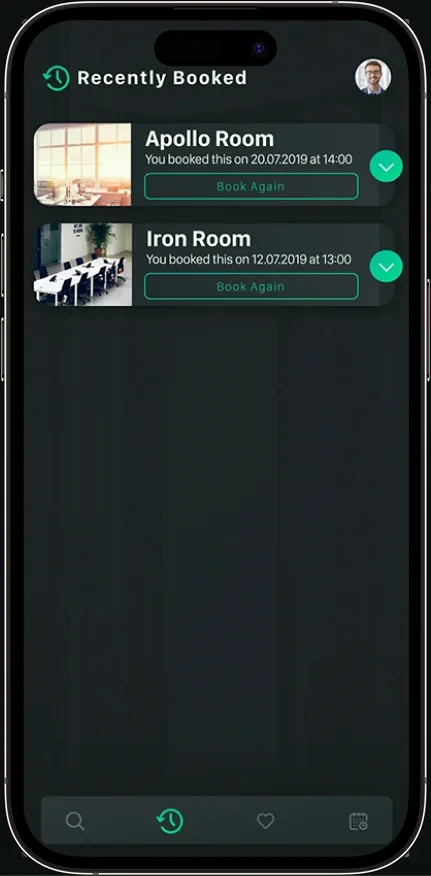
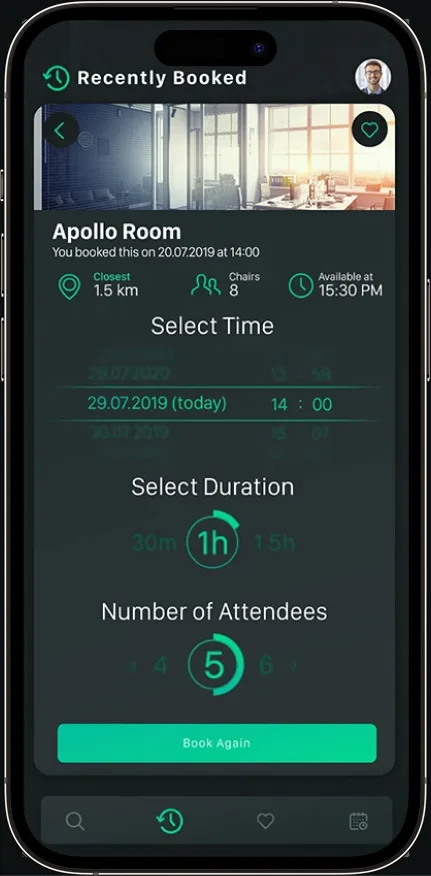
App overview — the complete mobile experience, from first launch through to booking confirmation.
All eight screens in flow — splash, login, location, home, room selection, community ratings, recently used, and book again.